

Khajuraho monuments in the Western Group form one of three clusters within the Khajuraho Group of Monuments in Madhya Pradesh. The group brings notable Hindu temples together in one area, including Kandariya Mahadeva, Lakshmana and Vishvanatha, making it a useful place to focus a walking visit. Headquarter Khajuraho is a base for visiting the monuments.
- Location: Khajuraho, Madhya Pradesh, India.
- Scale: The wider monument group covers 6 square kilometres.
- Western Group route: Start at Varaha Temple, then continue toward Lakshmana and the temples ahead from the entrance.
- Entry timing: Opening hours are 8:00 a.m. to sunset.
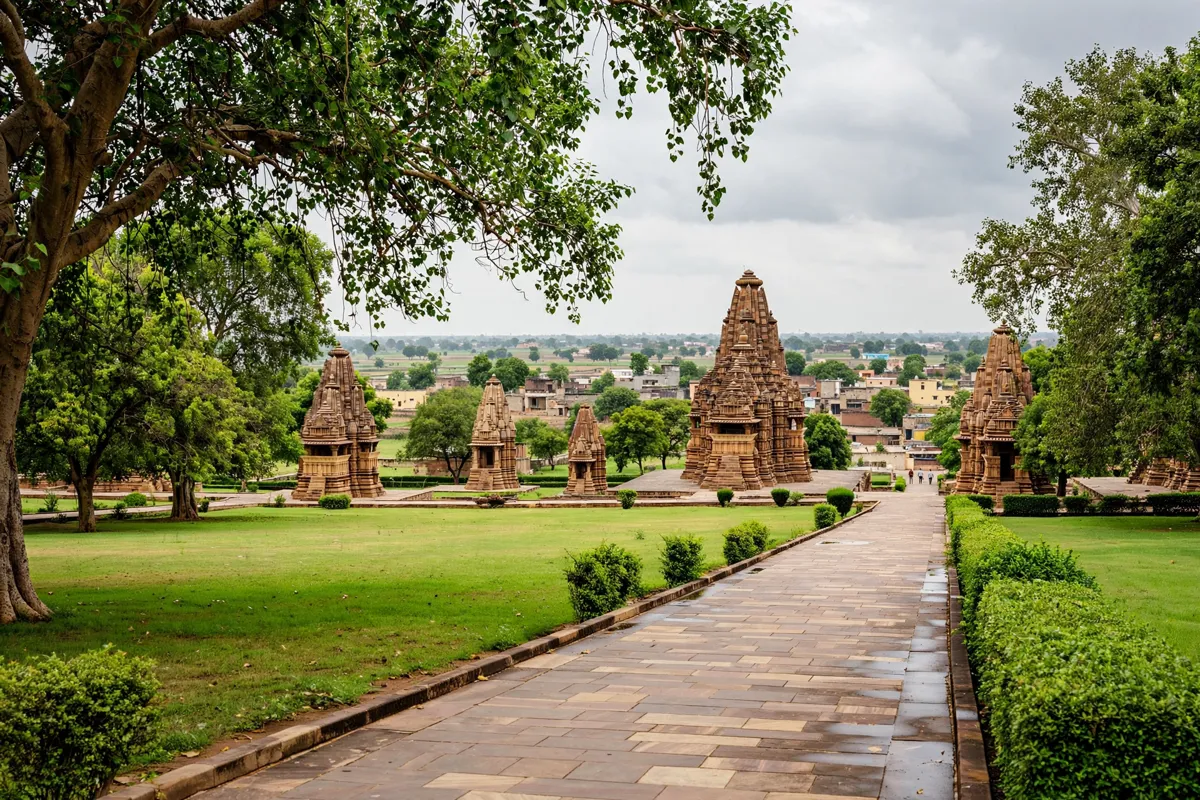
Where the Western Group sits in Khajuraho
The Western Group is one of three clusters in the Khajuraho Group of Monuments, spread across 6 square kilometres in Madhya Pradesh. UNESCO lists its protected area at 24°51′09″N, 79°55′15″E.
The Chandella dynasty built the temples, reaching its height between 950 and 1050 CE. The group was inscribed on the World Heritage List in 1986. Of the original 85 temples, about 20 survive; they represent Hindu and Jain faiths.
The Western Group has 12 temples, among them Kandariya Mahadeva, Lakshmana, Vishvanatha, Devi Jagadambi and Chitragupta. The wider Khajuraho complex also has an Eastern Group closer to the village, with three Hindu temples and four Jain temples.
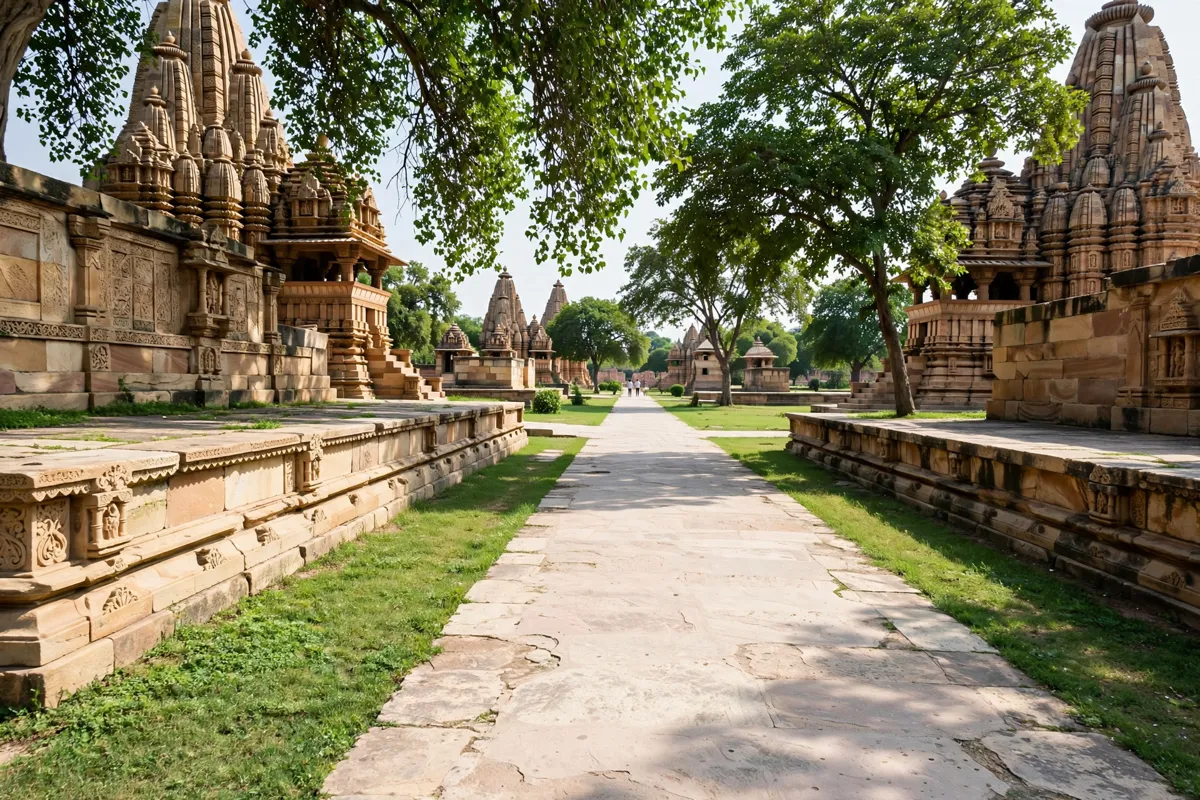
A practical order for seeing the temples
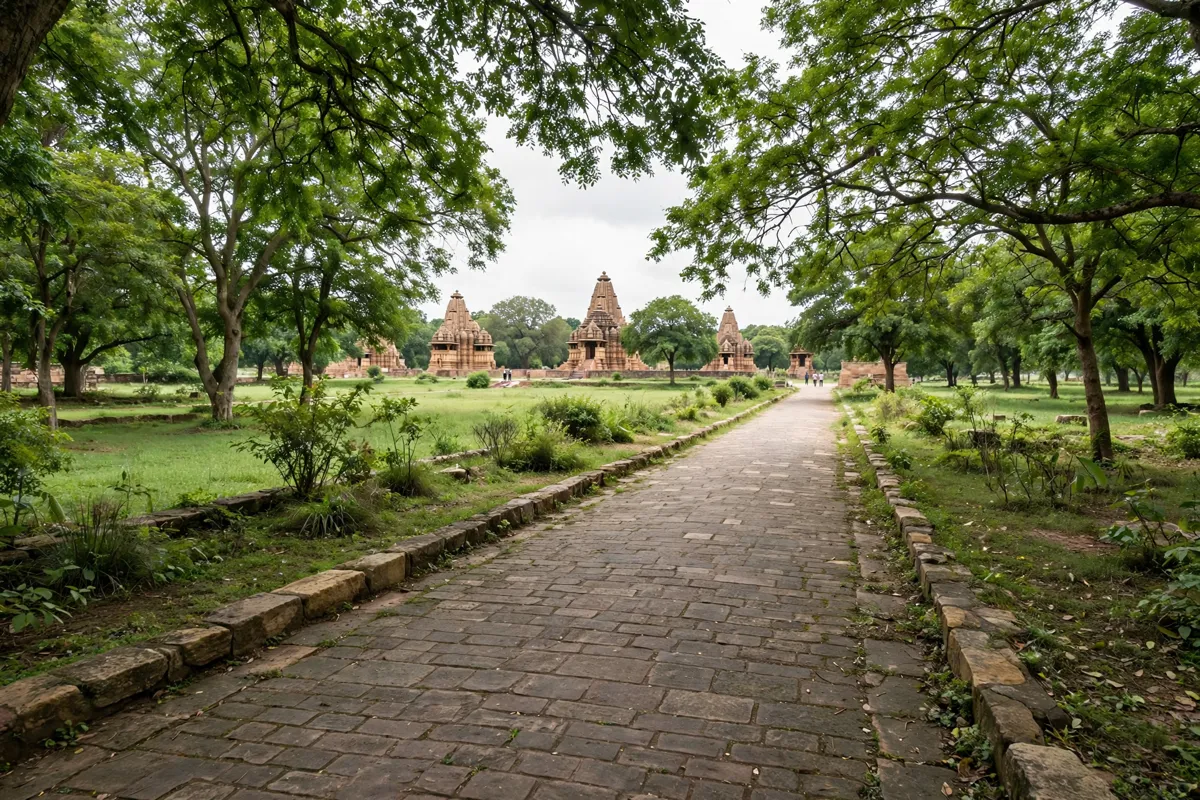
A straightforward Western Group walk begins at Varaha Temple, with Lakshmana nearby and Kandariya Mahadeva and Jagadambi straight ahead from the entrance area. This sequence follows a Madhya Pradesh Tourism guide, so you can orient yourself at Varaha before moving toward the larger temples.
Allow time to pause at each shrine rather than treating the grounds as a quick pass-through. The group includes several named temples, and the arrangement gives you a natural progression from Varaha toward the central monuments. Designated pathways are the right routes to use; ASI guidance also asks visitors to stay out of cordoned or restricted areas.
A Khajuraho itinerary can combine time at the temples with a wider day around town.
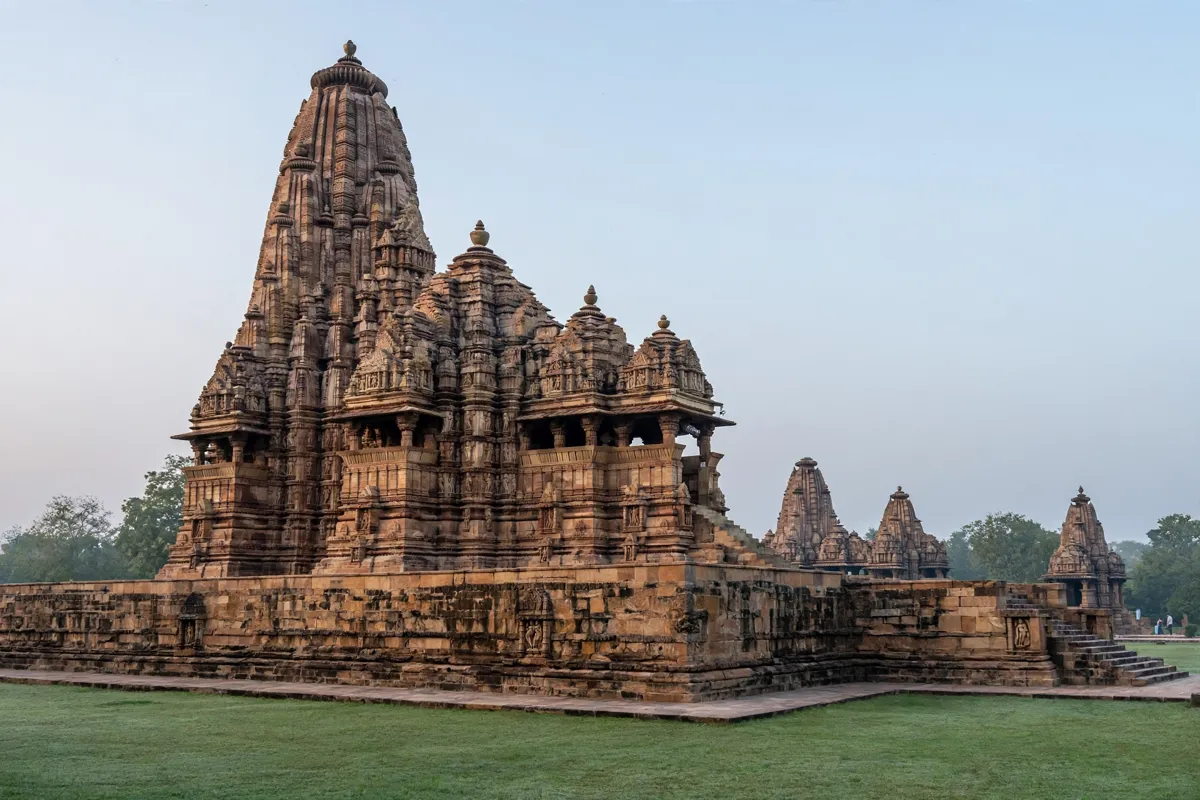
What to notice at Kandariya Mahadeva Temple
Kandariya Mahadeva is dedicated to Shiva, rises more than 31 metres and carries more than 870 sculptures. Those figures make the temple a natural place to slow down and look across its exterior rather than focusing on a single detail.
As you approach, take in the height and shape first, then look across the sculpture-covered surfaces. Keep to the designated paths and follow any restrictions on where photography is allowed. The Western Group includes the Chaunsath Yogini Temple too, a granite structure and the complex’s earliest surviving shrine. The Khajuraho Archaeological Museum adds context beyond the monuments.
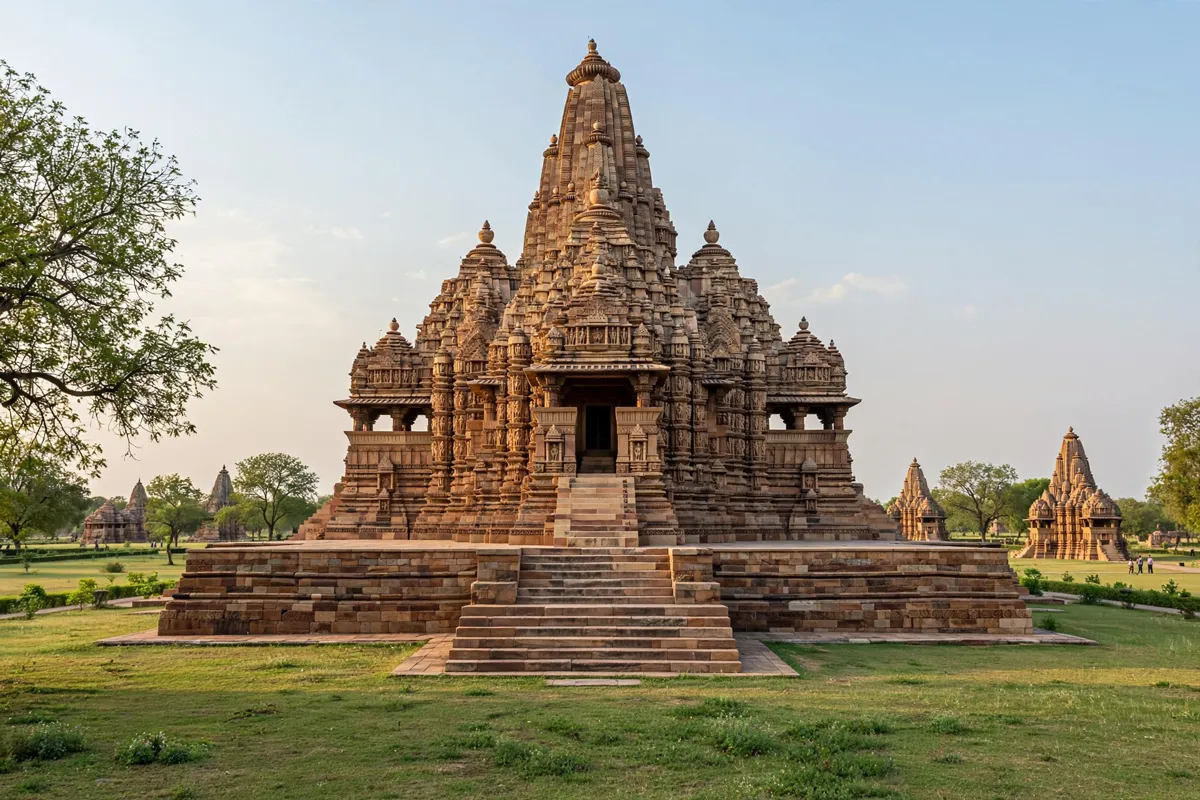
Lakshmana and Vishvanatha temples
Lakshmana Temple is a shrine to Vishnu dating to approximately 930–950 CE. Lakshmana is among the temples close to the Varaha starting point, so it fits naturally early in the walk before continuing toward Kandariya Mahadeva.
Vishvanatha is another of the Western Group’s major named temples. The group also includes Devi Jagadambi, which lies ahead along the suggested route, and Chitragupta. To focus specifically on Lakshmana’s carvings, history and visit, read the Lakshman Temple Khajuraho guide.
Entry, opening hours and visitor etiquette
Opening hours are 8:00 a.m. to sunset. Check the official site before you go, using the Archaeological Survey of India (ASI) for ticket and visitor guidance.
Show original photo identification at entry; tickets are non-transferable and non-refundable. Edibles and inflammable, dangerous or explosive articles are not allowed. Follow the monument’s rules for filming and videography, avoid photographing restricted areas containing sensitive artworks or artifacts, and respect active customary practices by avoiding photography and loud behavior.
The Western Group project includes an entrance, parking, a main avenue, cafeteria, pathways, ticket and publication counters, an interpretation centre, toilets, signage and sit-outs. Use the designated pathways as you move between temples.
FAQs
How many temples are in the Western Group?
The Western Group has 12 temples. The wider Khajuraho group originally comprised 85 temples, about 20 of which survive.
Which temple is the best starting point for a walk?
Begin at Varaha Temple. Lakshmana is nearby, with Kandariya Mahadeva and Jagadambi ahead from the entrance area.
What should you bring for entry?
Bring original photo identification, which visitors must show at entry. Edibles and inflammable, dangerous or explosive articles are not allowed.