

Khajuraho history is closely tied to the Chandella dynasty, which made the town a capital and built its temples during the 10th and 11th centuries. Today, the Khajuraho Group of Monuments in Madhya Pradesh brings together surviving Hindu and Jain temples that offer a view of the region’s medieval culture and architecture.
- Location: Khajuraho, Madhya Pradesh, India.
- Temple-building period: The Chandella dynasty reached its peak between 950 and 1050.
- Monument groups: Western, eastern and southern clusters spread over 6 square kilometres.
- Heritage status: UNESCO added the group to the World Heritage List in 1986.
Khajuraho before the temples
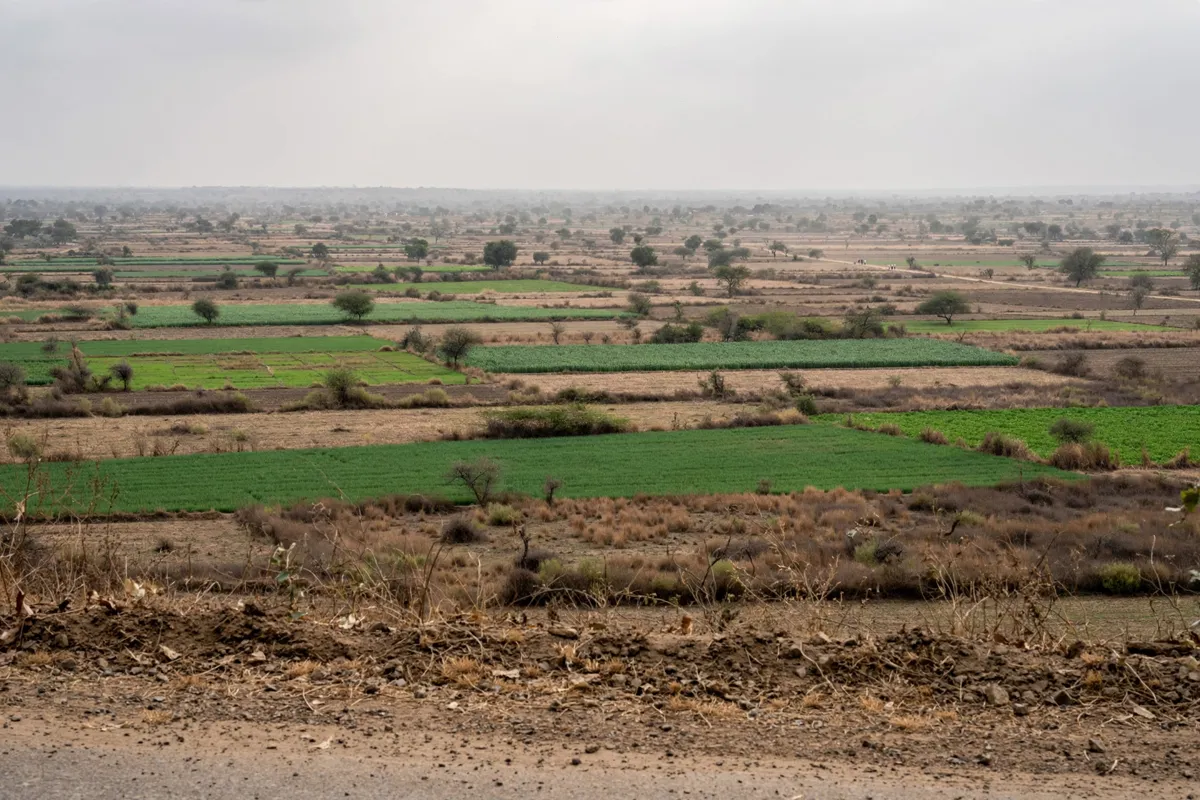
Khajuraho’s temple landscape developed in a region known in medieval times as Jejābhukti or Jejākabhukti. From the 14th century, the region was known as Bundelkhand. The town later became a Chandella capital, giving the monuments a place within a wider political and cultural story.
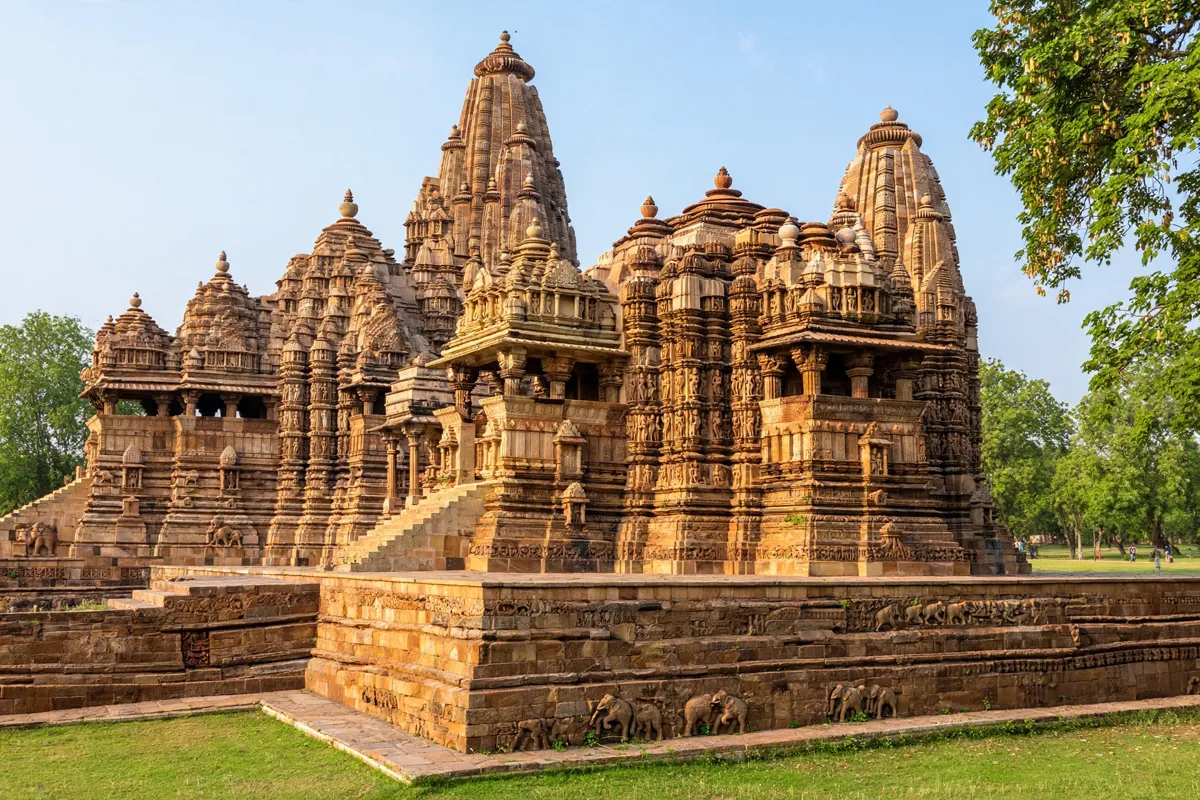
The Khajuraho Group of Monuments stands as evidence of Chandella culture before the Delhi Sultanate was established in the early 13th century. Its history is therefore not only about the surviving buildings: Lakshman Temple’s carvings and history also reflect the importance of the dynasty and the region it ruled.
The Chandella period and temple building
The Chandella dynasty built Khajuraho’s temples between 950 and 1050 AD, during a period when the dynasty reached its peak. The Archaeological Survey of India gives a broader span for the temple group, dating it from the late ninth to the 12th centuries AD.
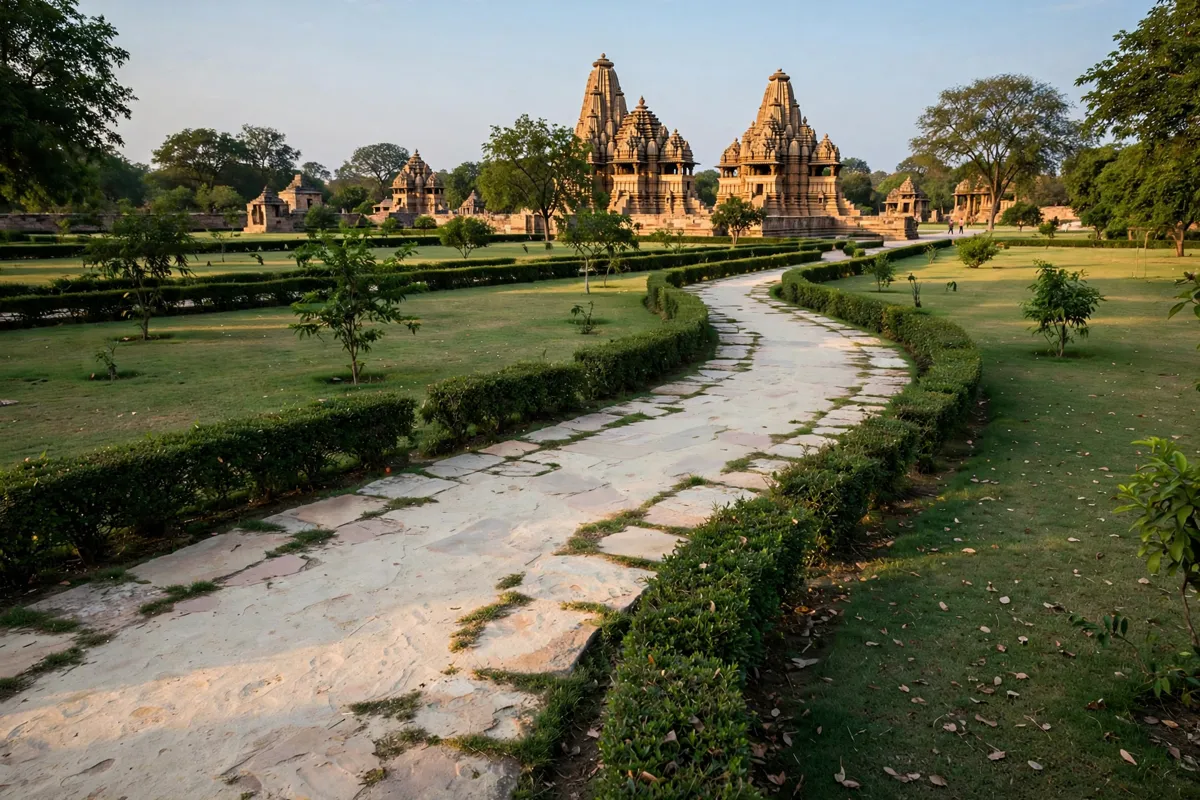
The surviving buildings show a distinctive approach to temple design. UNESCO describes them as examples of Nagara-style architecture: sandstone structures set on ornate raised platforms and decorated with sculpted sacred and secular subjects. The carved exteriors form part of the architecture rather than a separate layer of decoration.
Kandariya Mahadeva Temple is among the group’s artistic masterpieces, noted for its profusion of sculptures. Across the monuments, the range of subjects and the scale of the architectural work make the temples important evidence of the period.
Why the temple groups matter
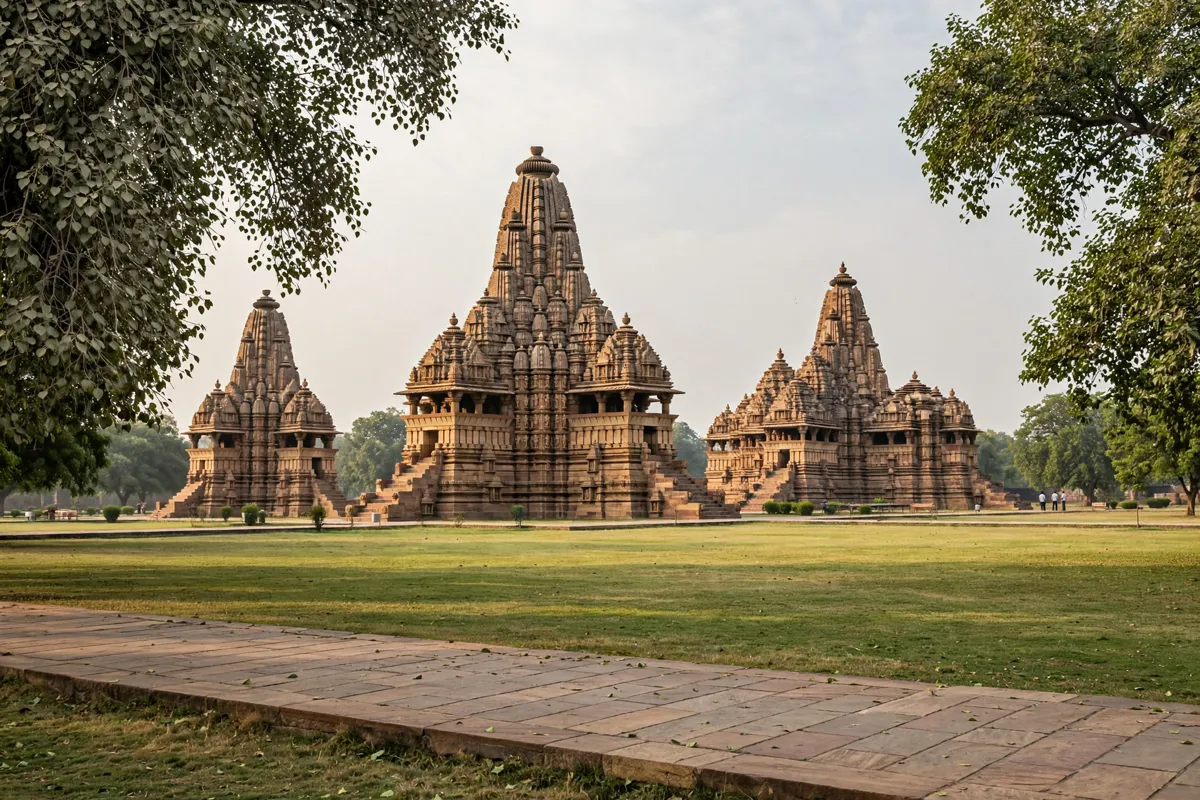
Khajuraho’s monuments matter as a connected group: UNESCO describes three clusters—the western, eastern and southern groups—spread across 6 square kilometres. The group contains 23 temples, including one partly excavated structure.
About 20 of the original 85 temples survive, representing Hindu and Jain faiths. Their different religious traditions are part of the site’s historical significance. Together, the remaining temples preserve a substantial record of the Chandella period, even though most of the original buildings are no longer standing.
The three clusters give the monument area its broad layout. Within them, the architecture and sculpture offer ways to consider both religious practice and the culture of the former capital. A walking guide to Khajuraho’s Western Group can help orient visitors to this cluster, which includes Matangeshwar Temple, a connection between the historic ensemble and worship that continues today.
Matangeshwar Temple and living worship
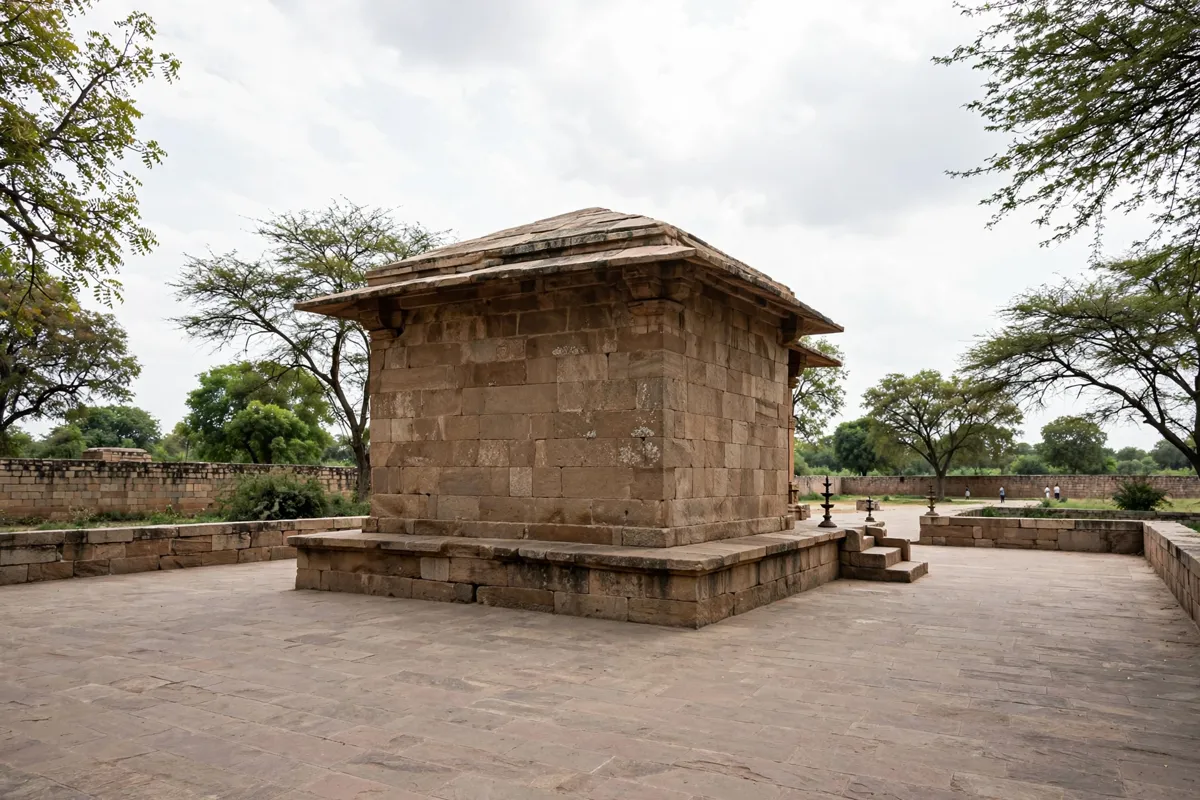
Matangeshwar Temple is part of Khajuraho’s Western Group and remains an active place of worship. Its presence adds a living religious dimension to a site often discussed through its medieval architecture and sculpture.
When you visit, keep that distinction in mind: the monument group is a protected heritage site, while Matangeshwar is also a place where worship takes place. If you include the temple in your visit, remember that it is an active place of worship. You can read a focused guide to Matangeshwar Temple and what to expect before you go.
Heritage recognition and visiting the sites today
UNESCO inscribed the Khajuraho Group of Monuments on the World Heritage List in 1986 under criteria (i) and (iii). The designation recognises the group’s artistic significance and its value as evidence of Chandella culture.
The Government of India owns the monuments, and the Archaeological Survey of India manages them under the Ancient Monuments and Archaeological Sites and Remains Act, along with its associated rules and amendments.
Fences mark the protected limits of the western, eastern and southern clusters. Around designated monuments, protected areas include prohibited and regulated zones extending 100 metres and 200 metres, respectively.
As you plan a visit, keep the protected boundaries in mind and follow the site rules. You can use the cluster layout to orient your visit; the western, eastern and southern groups each sit within marked limits. Matangeshwar Temple is about 5 minutes on foot from Headquarter Khajuraho.
FAQs
When were the Khajuraho temples built?
The Chandella dynasty built the temples mainly between 950 and 1050 AD. The Archaeological Survey of India gives a broader date range for the temple group, from the late ninth to the 12th centuries AD.
How many temples survive at Khajuraho?
About 20 of the original 85 temples survive. UNESCO describes the monument group as having 23 temples, including one partly excavated structure.
Which religious traditions are represented?
The surviving temples represent Hindu and Jain faiths. Matangeshwar Temple is also an active place of worship.
Who manages the Khajuraho monuments?
The Government of India owns the Khajuraho Group of Monuments, and the Archaeological Survey of India manages it.